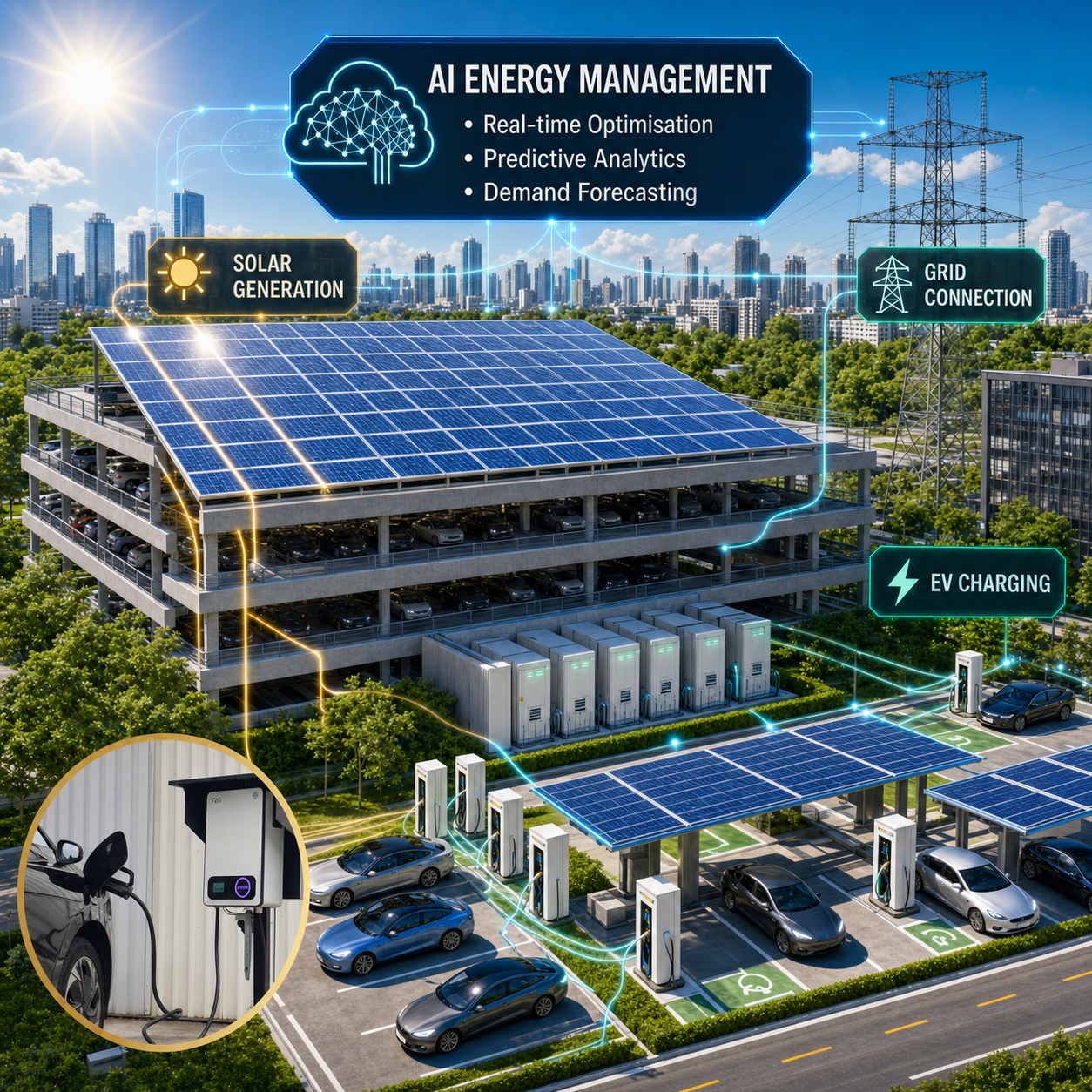
The journey to carbon neutrality is often framed as a race to deploy more renewable energy. But as solar panels, battery storage and electric vehicles become increasingly common, a new challenge is emerging: how do we manage energy that is more distributed, dynamic and complex than ever before? The answer may lie not only in generating cleaner energy, but in managing it more intelligently. From Reactive to Predictive Energy Management Traditionally, power systems have responded to changes in electricity demand and supply. However, renewable energy sources such as solar power are inherently variable, while electrification is creating more unpredictable consumption patterns. As a result, future energy systems will need to move from reactive operations to predictive optimisation. Artificial intelligence is making this possible. By forecasting renewable generation and electricity demand, AI can continuously optimise how solar power, battery storage, EV charging infrastructure and grid electricity interact. Rather than responding after conditions change, energy systems can increasingly anticipate fluctuations and allocate resources more effectively in real time. Distributed Energy as the Foundation AI delivers the greatest value when coupled with distributed energy infrastructure. By integrating solar photovoltaic generation, battery storage, direct-current (DC) distribution and EV charging close to where energy is consumed, distributed energy systems create a more flexible and resilient energy ecosystem. Underutilised urban spaces such as rooftops and car parks can be transformed into local energy hubs, expanding renewable energy adoption without major grid upgrades. At ASTRI, this vision is embodied in an AI-driven PV-ESS-EV charging solution that combines renewable energy generation, storage and intelligent management into a single platform. The goal is not to replace the grid, but to enhance its efficiency and adaptability. Technology innovation also plays a critical role. ASTRI’s self-developed photovoltaic microinverter achieves conversion efficiencies above 97%, while its centralised AC/DC conversion technology reaches 98.8% peak efficiency. Together with DC distribution networks and highly efficient smart lighting infrastructure, these technologies help maximise the value of every unit of renewable energy generated. From Vision to Reality To demonstrate the potential of this approach, ASTRI deployed an integrated smart energy platform at an outdoor car park in Yuen Long. Combining solar generation, battery storage, EV charging, DC distribution and AI-enabled controls, the pilot showed how multiple technologies can work together to improve operational efficiency, renewable energy utilisation and energy resilience in a real-world environment. The business case is equally compelling. By integrating renewable energy, battery storage and Vehicle-to-Grid (V2G) capability, the solution delivers both ESG and financial value, with an estimated payback period of around three years. Rethinking the Energy System The significance of distributed energy extends beyond infrastructure. It signals a shift towards an intelligent energy ecosystem where generation, storage and consumption are dynamically coordinated. Achieving carbon neutrality will require more than clean energy alone. It will require smarter energy. As AI and distributed energy technologies continue to mature, their convergence could become one of the defining drivers of a more sustainable, resilient and liveable future. Learn more: corporate@astri.org